
Image to 3D Model Free: What's Actually Free in 2026 (And What's Not)
"Image to 3D model free" is one of the most-searched phrases in the 3D space right now. A dozen tools compete for that click, and almost all of them call themselves free. Some genuinely are. Most aren't — not entirely.
Here's an honest breakdown of what you actually get without paying in 2026.
Two Very Different Technologies Share the Same Name
"Image to 3D" covers two fundamentally different approaches:
- AI generation: Feed the tool one photo (or a handful), and a neural network constructs a plausible 3D object. It guesses what the back looks like. It infers geometry from appearance cues.
- Photogrammetry: Feed the tool 40–150 photos taken from different angles, and it calculates the actual geometry of the object mathematically, using pixel overlaps between images to reconstruct real surfaces.
Both turn photos into 3D models. They're solving different problems, with very different accuracy and quality profiles. Knowing which one fits your use case shapes which "free" options actually work for you.
The AI Generation Tools
Several tools offer free single-image-to-3D today.
TripoSR (open-source, runs locally or via hosted inference) is genuinely free. It produces a mesh from a single photo in seconds. The results are useful for quick prototypes, game asset drafts, or visual references — but the geometry is inferred, not measured. Details look fine at a distance and get blobby under closer inspection; hard edges tend to soften.
TRELLIS-2 (Microsoft, open-source) produces higher-quality results — full meshes with PBR materials from a single image. Running it locally requires a capable GPU. A cloud-hosted version is available through a few platforms. It's free to self-host, though "free" here means GPU time, not zero cost.
Luma AI and Tripo3D offer free tiers with limited generations per month. Queue times on the free tiers can stretch during peak hours. Export formats are often restricted unless you pay.
Meshy AI — one of the most prominent tools in this space — gives free users 100 credits per month. The catch: their latest Meshy 6 models cannot be downloaded on the free plan. Free-tier downloads are limited to Meshy 5 outputs, and those come with a CC BY 4.0 license rather than full ownership — which matters if you're using the model commercially.
The pattern is consistent: free tiers restrict quality, download rights, commercial licensing, or export formats. Sometimes all four.
The Hidden Costs of "Free"
Even where tools are technically free, there are costs that don't appear on a pricing page.
Privacy. Every cloud-based tool processes your photos on someone else's server. For personal projects, this is usually fine. For client work, product prototypes, proprietary objects, or anything commercially sensitive, it's worth thinking about carefully.
Licensing. AI generation tools often place restrictions on how you can use the output. A CC BY 4.0 license requires attribution. Some platforms retain the right to use your generated models for training future AI. Read the terms before you build a workflow around a free tier.
Accuracy. AI generation tools produce plausible geometry, not measured geometry. If you need a model that matches the real dimensions of an object — for 3D printing, for fitting mechanical parts, for documentation — guessed geometry won't hold up. The back of the object was never photographed; the AI filled it in. For some use cases this is irrelevant. For others it's a dealbreaker.
Output quality floors. Several platforms offer free preview resolution, or add watermarks until you upgrade. The model exists, but isn't usable as-is.
Where Photogrammetry Fits
Photogrammetry calculates geometry from actual photo coverage. No guessing — every surface point is triangulated from real pixel data. The geometry is measured, not inferred.
Replica, available free on macOS, reconstructs 3D models from photos you take yourself. The free version processes up to 50 images and exports to USDZ natively (ideal for AR on Apple devices and Reality Composer). With Blender installed, you also get OBJ, FBX, GLB, and STL — including watertight, print-ready meshes.
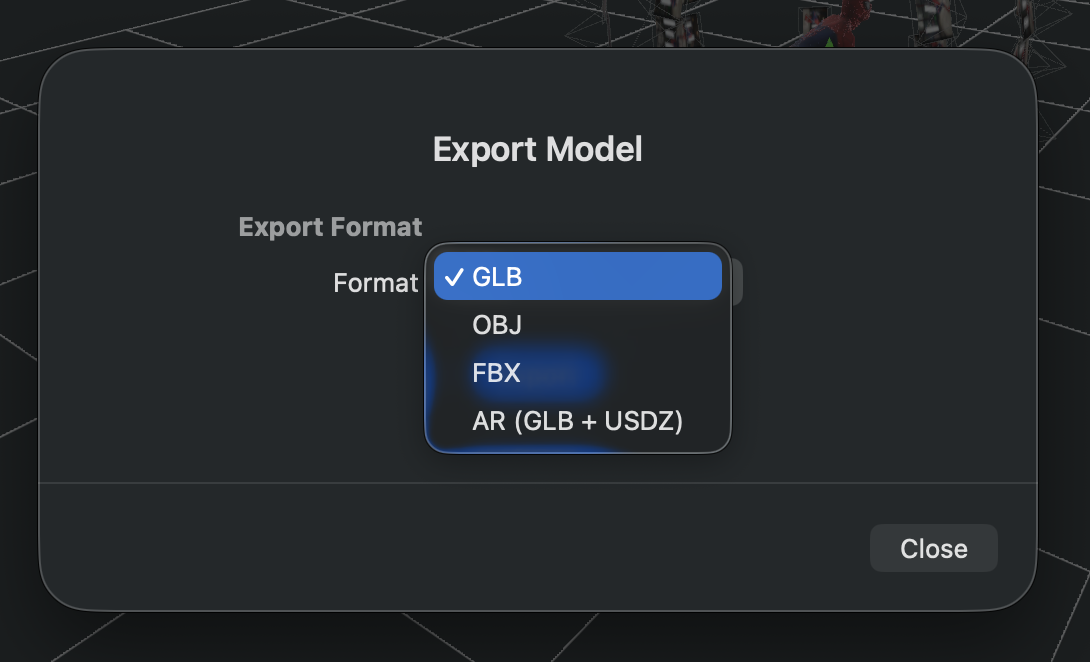 Replica's export panel — from AR-native USDZ to print-ready formats, covered without a subscription.
The workflow requires more effort than uploading a single photo. You need to photograph the object from many angles — typically 40–80 shots with good overlap. The payoff is real geometry. The model can be sliced and printed, used in engineering contexts, or archived for documentation.
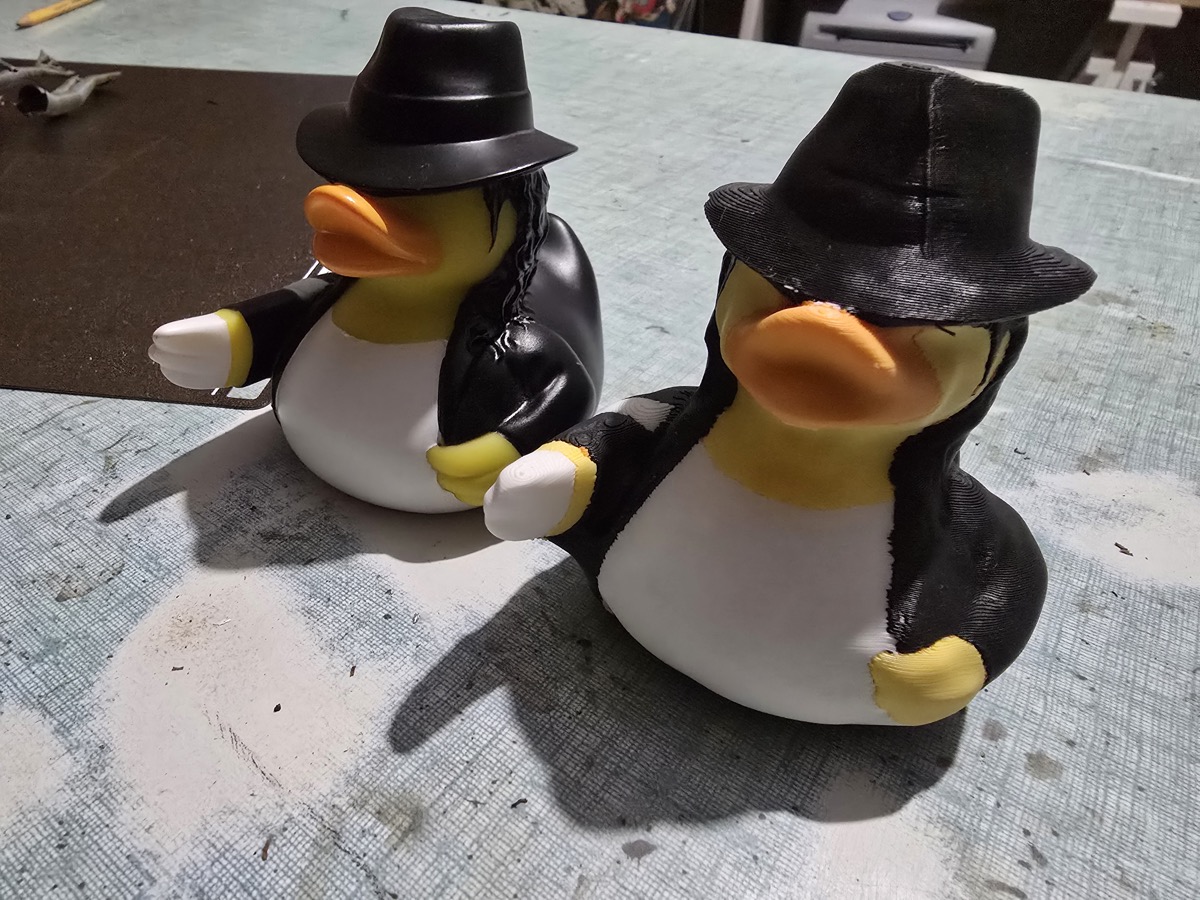 Every surface on this reconstruction was computed from actual photos — nothing was guessed or filled in by a neural network.
Everything processes on your Mac. No cloud upload, no subscription for the free tier, and no license restriction on what you do with the output.
Which Tool for Which Job
Quick 3D asset for a game, a sketch prototype, or an AR preview: AI generation is faster and often good enough. TripoSR and TRELLIS-2 are genuinely free options for this use case.
3D printing something that needs to match the original object: Use photogrammetry. Dimensional accuracy matters, and AI-guessed geometry isn't reliable for it. Replica's free tier handles objects up to 50 photos without needing a paid plan.
Working with client property or commercially sensitive objects: Don't upload to cloud services you don't control. Replica's local processing is a real advantage here.
Full commercial rights on the output, no attribution requirements: AI generation platforms vary significantly on this. Replica reconstructs your own photos — the output is yours.
Reflective or transparent surfaces: These genuinely challenge photogrammetry. AI generation tools can sometimes handle them more gracefully, though accuracy still suffers. Neither approach is great here; practical workarounds (polarizing filters, temporary matte spray) help for photogrammetry.
The Actual Free Options, Summarized
- TripoSR — genuinely free and open-source; single-image; limited quality
- TRELLIS-2 — genuinely free to self-host; better quality + PBR materials; requires a capable GPU
- Replica for macOS — genuinely free tier; up to 50 images; photogrammetry; runs locally; no license restrictions on output
- Meshy AI / Tripo3D / Luma AI — free tiers exist, with meaningful restrictions on quality, download access, or commercial licensing
If you want free and dimensionally accurate, and you're on a Mac, Replica is the honest answer. If you want free and instant from a single photo, TripoSR or TRELLIS-2 are real options.
Most tools claiming "free" in 2026 offer a free taste with a paywall behind the part you actually need. That's not dishonest — it's how software gets funded. Just worth knowing before you invest time in a tool and hit the export wall at the end.
Download Replica for macOS. For a step-by-step walkthrough of turning your scans into actual 3D prints, see From Photos to 3D Print.